

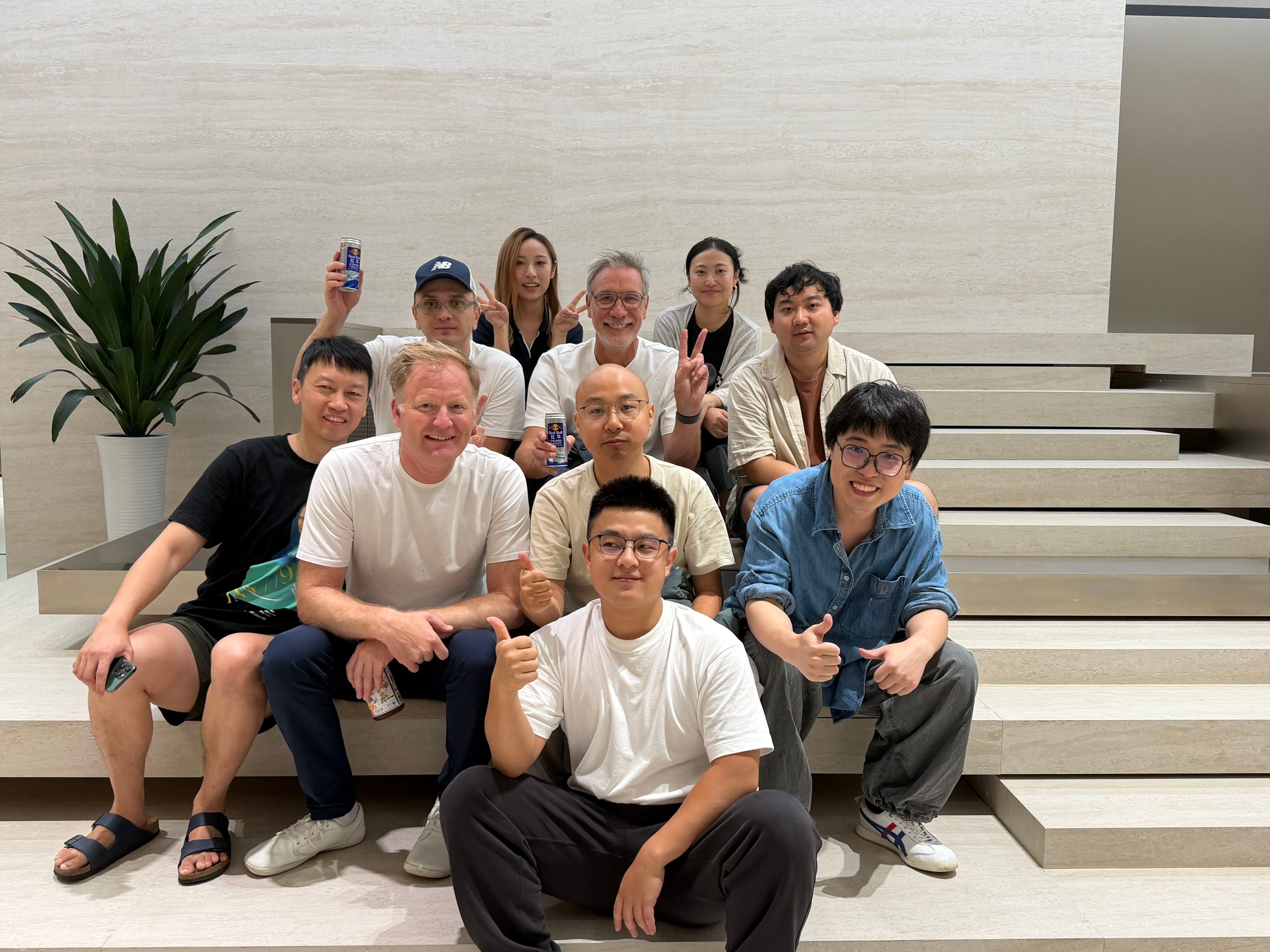
The UK and China teams together in Chengdu, September 2026.
Why we’re in Chengdu
Some of the most interesting work in applied AI right now is happening on open-weight models, and a lot of that work is happening in China.
The big closed models from OpenAI and Anthropic are remarkable. But you meet them through MCP, and you get the controls the provider chooses to expose. Open-weight models are different. We can run them on our own machines, fine-tune them, take them apart and build our own tooling around them. For a studio trying to invent new kinds of play on top of generative video, that control is everything.
China has a deep bench of engineers who live and breathe these models, and infrastructure that is genuinely world-class. That’s why Anorak set up an applied AI lab in Chengdu, led by co-founder Tak Fung. This September, we finally went to see it for ourselves.
Finally in the same room
In mid-September, Shaun, Yaro and David flew from London to Chengdu to spend the week with the team.
We’d worked together for months over Slack and video calls, with sprint reviews stretched across a seven-hour time difference. Nothing beats sitting at the same table. We started with a morning of meet-and-greets, then went deep on what everyone is building, demo by demo.
It was a joy. Seeing their work first-hand, and getting to hang out with the people behind it, was the best part of the trip.
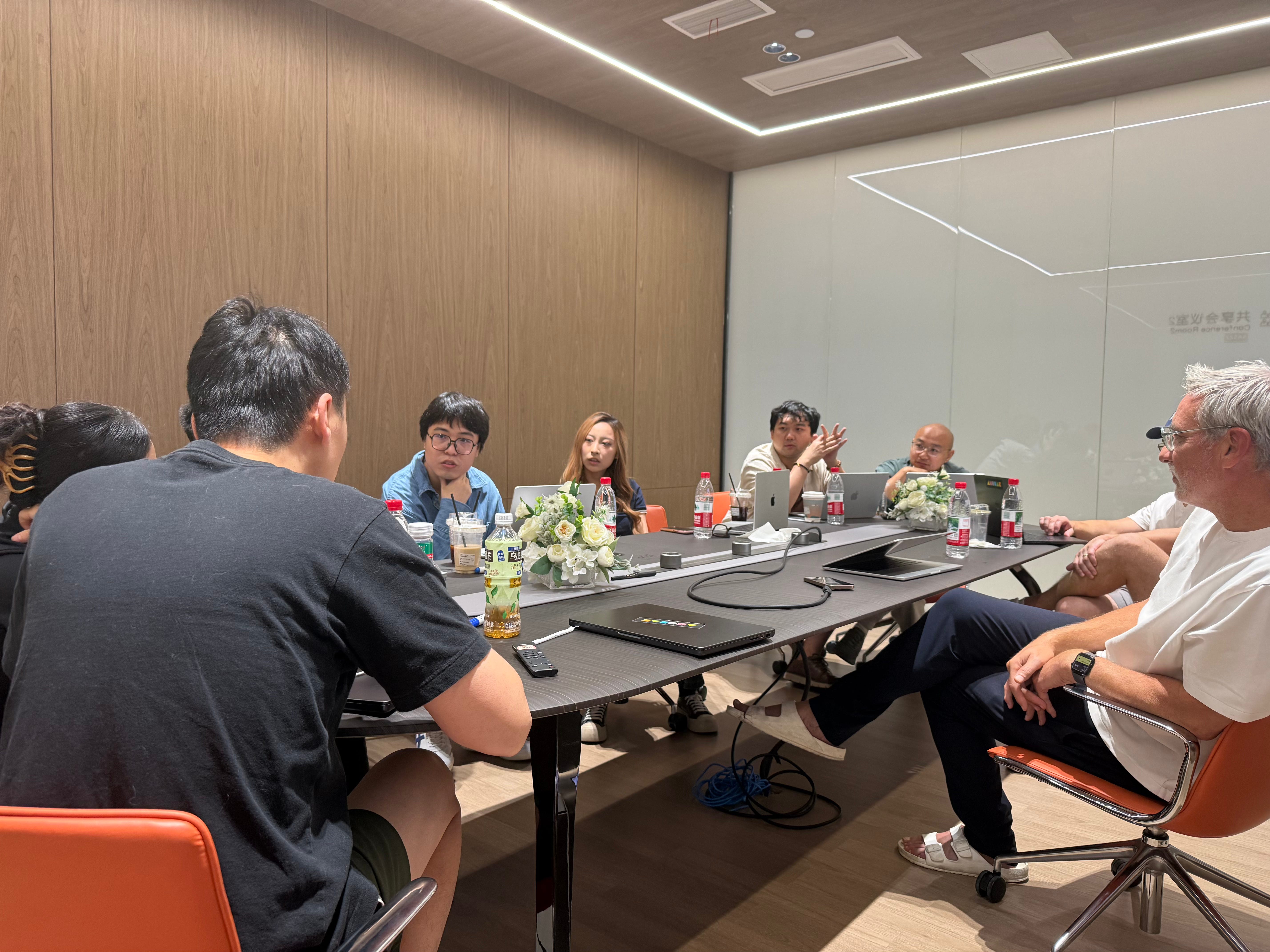
Going through the demos with the Chengdu team.
What the team is building
Most of the lab’s work comes back to one question: how do you make a video model do what a game needs it to do? A model that makes a beautiful clip is one thing. A model you can steer, frame by frame, is what turns video into play. A few things we saw:
Pinning down the shot. The team has built tooling that reliably locks the first and last frames of a generated clip, so a scene starts and ends exactly where the game needs it to.
Drawing the path. Sketch a route across a map, turn the terrain into a 3D model, fly a camera along that route, then use the fly-through to guide the video model. The result is generated footage that follows a path you chose.
Adding light to flat video. Pulling depth and surface detail out of ordinary 2D video, so scenes can be relit and given real shadows.
Our own model platform. A shared inference service that lets anyone at Anorak call open-weight video, segmentation and upscaling models, with the team constantly tuning it for speed and cost.
On top of that, the team is prototyping new game ideas built around generative video, from outdoor adventures to a virtual pet. Not all of it is ready to show yet. Watch this space.
Seeing China through our hosts’ eyes
For the UK team, the real privilege was seeing China with people who live there. Our hosts showed us their city, fed us relentlessly (the Sichuan spice lived up to its reputation), and answered an endless stream of questions from three jet-lagged visitors from London.
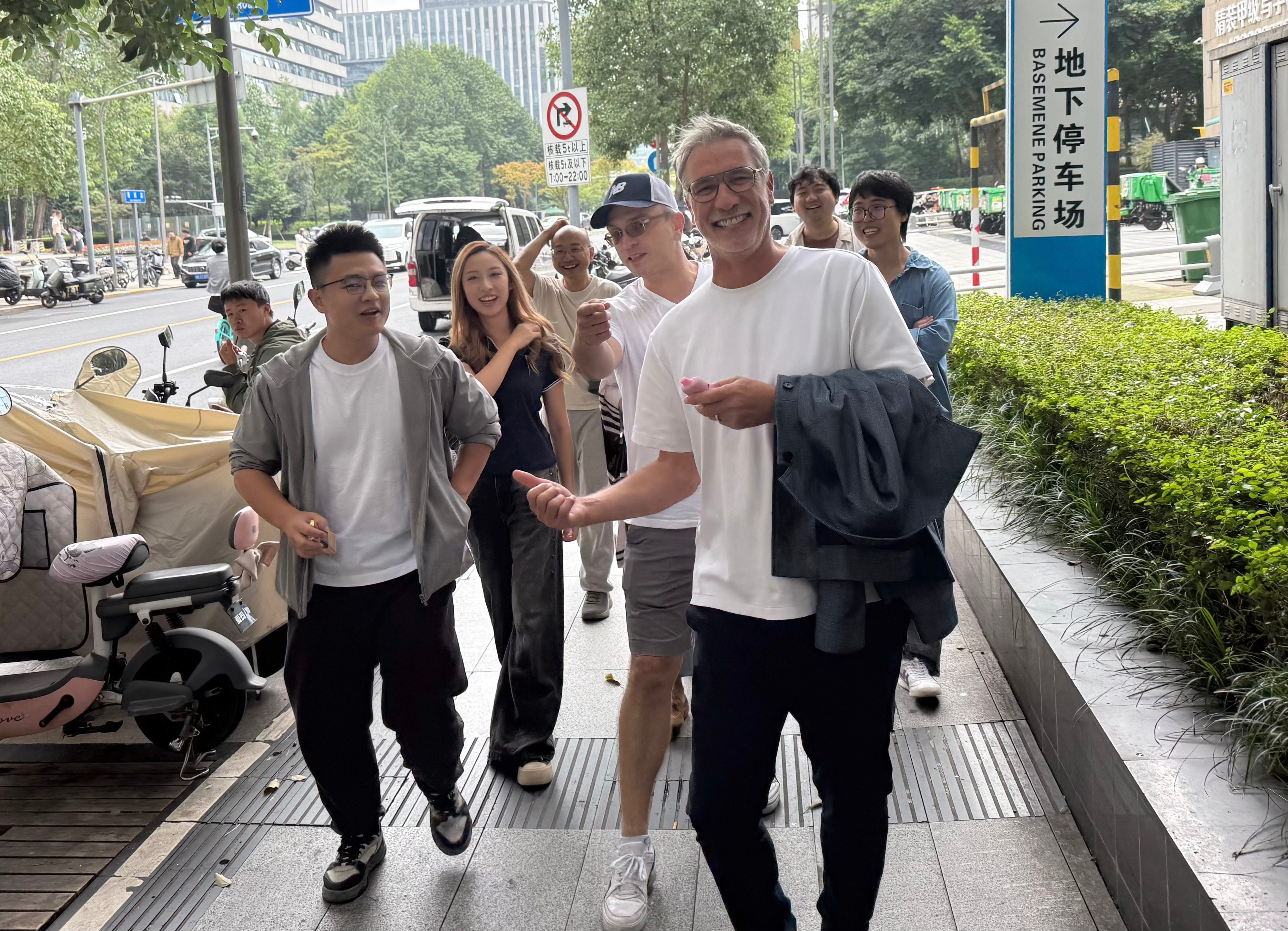
Out on the streets of Chengdu.
We came home in awe of the place. The transport, the payments, the delivery networks, the pace of building: everything just works, at a scale that is hard to picture until you’re standing in it. For a company that thinks a lot about infrastructure, it was humbling.
And then there was karaoke. The China team had already told us they love KTV. They did not exaggerate. We held our own with some big eighties rock anthems, helped along by a bottle of Monkey Shoulder. We won’t be sharing the recordings.
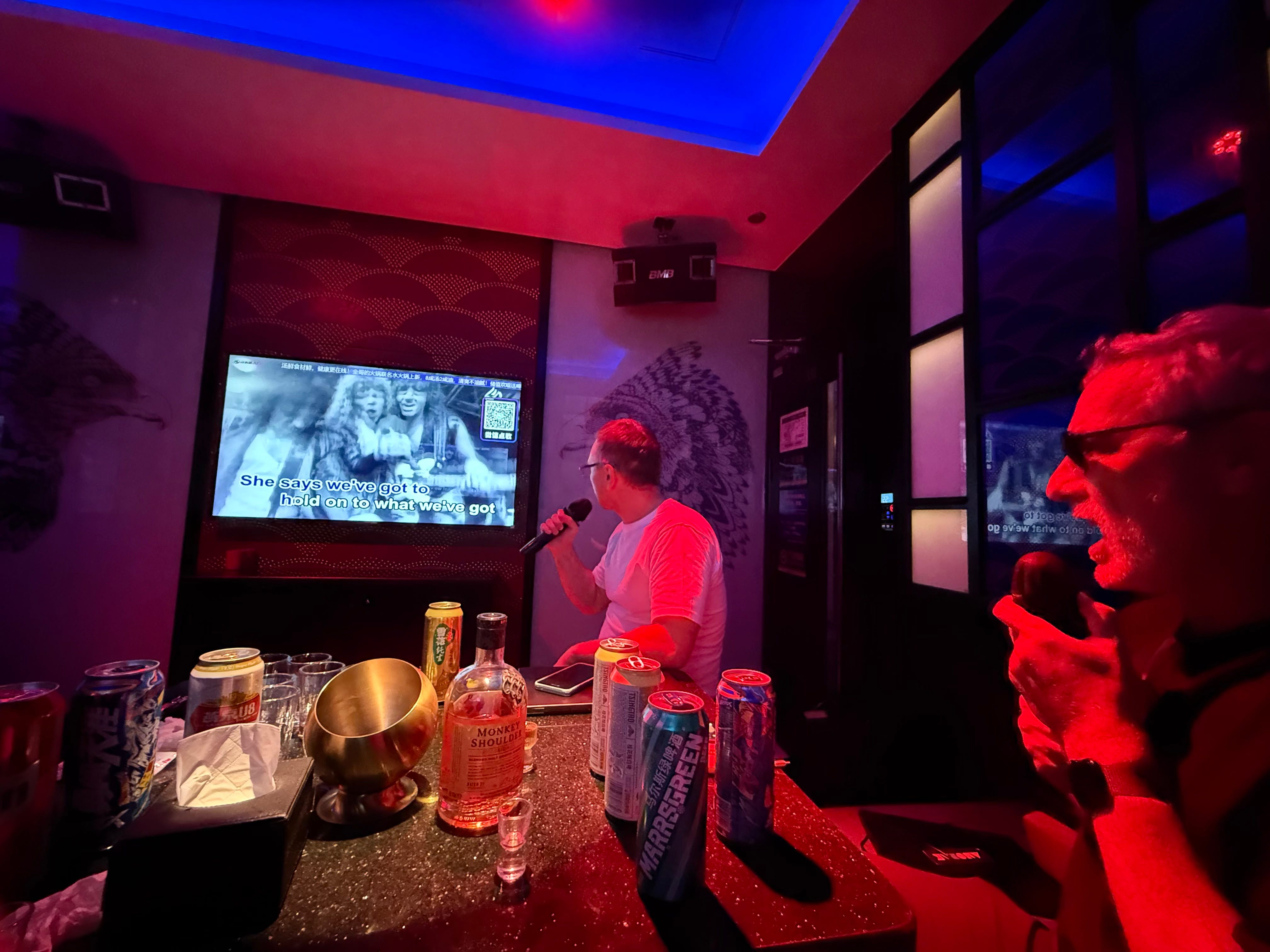
KTV night. Some of us sang better than others.
Why it mattered
We flew home tired, well fed and more excited than ever about what this team is doing. The Chengdu lab is at the heart of how Anorak is learning to build games with generative video; turning it from something that simply looks impressive into something that can be shaped and controlled like games (and games that people will want to play).
Finding novel ways to direct what happens on screen, control how scenes unfold, and give AI-generated environments the consistency and precision that interactive experiences demand. The Chengdu team is developing the technology while already exploring what it could mean for entirely new kinds of games. That’s what’s exciting.
A week together turned colleagues on a video call into friends. Thank you to everyone in Chengdu for being such brilliant hosts. We’ll be back, and we’re already practising for the next round of KTV.
Ah, I miss living in Chengdu, good times, lovely people.